

Two things can be true
We can become so convinced of our own view that we fail to see how and why others come to wildly different conclusions. And they aren't necessarily wrong to do so.

One of the joys of writing this Substack is the unexpected moments when someone says they want to share something that means a lot to them.
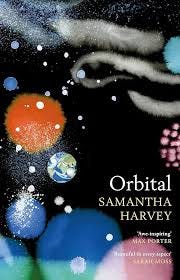
This week a new friend called Will gave me his copy of Samantha Harvey’s Booker Prize-winning novel, Orbital. I loved that it came with the boarding pass he had used as a bookmark - it somehow meant more that it was his personal copy.
Will shared that he had been captivated by Harvey’s prose, the way it captures the geography and topography of our planet from the vantage point of the International Space Station:
“Outside the earth reels away in a mass of moonglow…the tufts of cloud across the Pacific brighten the nocturnal ocean to cobalt. Now there’s Santiago on South America’s approaching coast in a cloud-hazed burn of gold.”
But what had truly stayed with Will - the gift he wanted to share with me too - was a moment including two astronauts gazing down at the Earth:
“Nell wants sometimes to ask Shaun how it is he can be an astronaut can believe in God, a Creationist God that is…He’d ask how is it he can be an astronaut, and not believe in God.”
The passage continues from Nell’s perspective:
“Look, she’d say. What made that but some heedless, hurling, beautiful force?
And Shaun would point out of the port and starboard windows where the darkness is endless and ferocious, at exactly the same violently scattered solar systems and galaxies and at the same deep and multidimensional field of view warped with space-time, and he would say: what made that but some heedful hurling beautiful force?”
One view. Two diametrically opposed conclusions.
It was clear that Will leaned on the side of those who believe there are “heedful” forces. And that he had carefully weighed that conclusion against the opposing arguments of those who believe intelligent design doesn’t adds up – least of all with all the war, pain and suffering that is clearer on closer inspection.
I devoured the book quickly – it’s just 136 pages. And I enjoyed encountering that scene – earlier in the book than I had supposed - and finding out how I would react. Answer: caught between the two views. Head saying, “Heedless”, heart saying, “Heedful”.
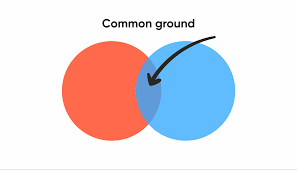
On reflection, I was most struck by the profound tension. On one hand, there is common ground - both are struck by the overwhelming beauty of the spectacle. But on the other, there is a fundamental divergence in how they interpret the evidence of their own eyes. Neither really knows if they are right or wrong – they have sifted the information through their own filters, diminished some points and amplified others…
This strikes at the heart of what – for me – Harvey is doing in this novel. She is flipping our normal perspective. As human beings, we almost exclusively operate from the “inside out.” We live behind our eyes; we process every piece of evidence through the specific, unique, and often distorted filters of our own history, fears, and biases. We are trapped in the subjective.
Harvey, however, writes from the “outside in.” By placing her characters in orbit, she attempts to give us the God’s-eye view, the “Overview Effect” that real-life astronauts report. In so doing, she reveals a tricky paradox: even when we physically leave the world behind to see the big picture, we still pack our subjective lenses in our luggage.

This is a deep wisdom that extends far beyond the stratosphere. It asks us:
How often do we experience the world with absolute clarity, convinced our conclusion is the only logical one, only for another human being to discount it entirely?
Akira Kurosawa’s film Rashomon – based on a short story – tells the same story of a crime from four different perspectives. The elements are almost identical – but each character provides subjective, alternative, and contradictory versions of the same incident. What is true? What is false? What is misinterpretation?

There is no single “truth,” only differing versions interpreted by individual egos.
In geopolitics, we see this played out with higher stakes. Look at any contested border. One side looks at a wall and sees essential security, a “heedful” protection of their people. The other side looks at the exact same concrete and sees a prison, a “heedless” act of oppression. The physical object is the same; the reality experienced is not just different, it is inverted.
I see this in my own life.
I have been trying to explain to key figures from my childhood that they had a profound effect on me. I laid out the difficult memories. I described the impact. To me, the cause and effect were as visible to me as the continents from space.
The response? Confusion. My memories were not recalled by them. Instead, a belief that I had over-stated the impact of something that was probably unintentional.
In moments like that, the temptation is to rail against. To entrench. To scream, “Look through the window! It’s right there!”
But I suspect Samantha Harvey is suggesting in Orbital that we can try a different path. We have a choice. We can stay locked in our own perspective, convinced of our own rightness, or we can try to do what she is doing: attempt to think out of ourselves. She is inviting us to look through the other end of the telescope, to turn the tables, to consider, “I may have this wrong.”
When someone sees “heedless forces” where we see “heedful” ones, we must pause. Instead of dismissing them, we have to ask: What am I missing? What are they seeing that I can’t? Why does their filter give such weight to things I ignore?
Acknowledging this doesn’t mean capitulating. It doesn’t mean we come to the conclusion that they are right and we are wrong. But it opens the door to the possibility that we may not be entirely right and they may not be entirely wrong.
It allows for the complexity of a world where two truths can orbit each other. Either of those two things could be right, could be wrong, or more likely somewhere in between. We can find an overlap - and from that we can build. But we can’t if we are only interested in pushing and defending our worldview.
Jesus advises us to:
“Take the log out of your own eye, and then you will see clearly to take the mote out of your brother’s eye.”
Perhaps the “log” isn’t just a moral failing. Perhaps it is simply our own perspective -the heavy, immovable certainty that we are the only ones seeing the view clearly. To seek wisdom is to try, however briefly, to float weightless, to look through the other person’s window, and to realise that the Earth is almost always vast enough to hold both their view and ours.
Thoughts? I’d love to hear them. And if you have found this piece useful please hit the heart-shaped “like” icon, or circular “restack” button. Thank you.
Notes:
Orbital - by Samantha Harvey
https://www.penguin.co.uk/books/454068/orbital-by-harvey-samantha/9781529922936
Rashomon - directed by Akira Kurosawa
https://www.criterion.com/films/307-rashomon?srsltid=AfmBOopmk0ZnStpIJ6MZBws8gP-wZtvBccmd8Jl2BIp80P_D1I_JKC-B
Thank you Craig. It would be a much happier and safer World if more people took this approach.
What an enlightened point of view, Craig, and wonderfully expressed. Thank you. I plan to take some of that wisdom with me in my daily life and when I form my own perspectives.