

The Marks We Make
Making an impact without causing harm in this life is one of our greatest challenges - sometimes it takes something truly dramatic to make us realise that.

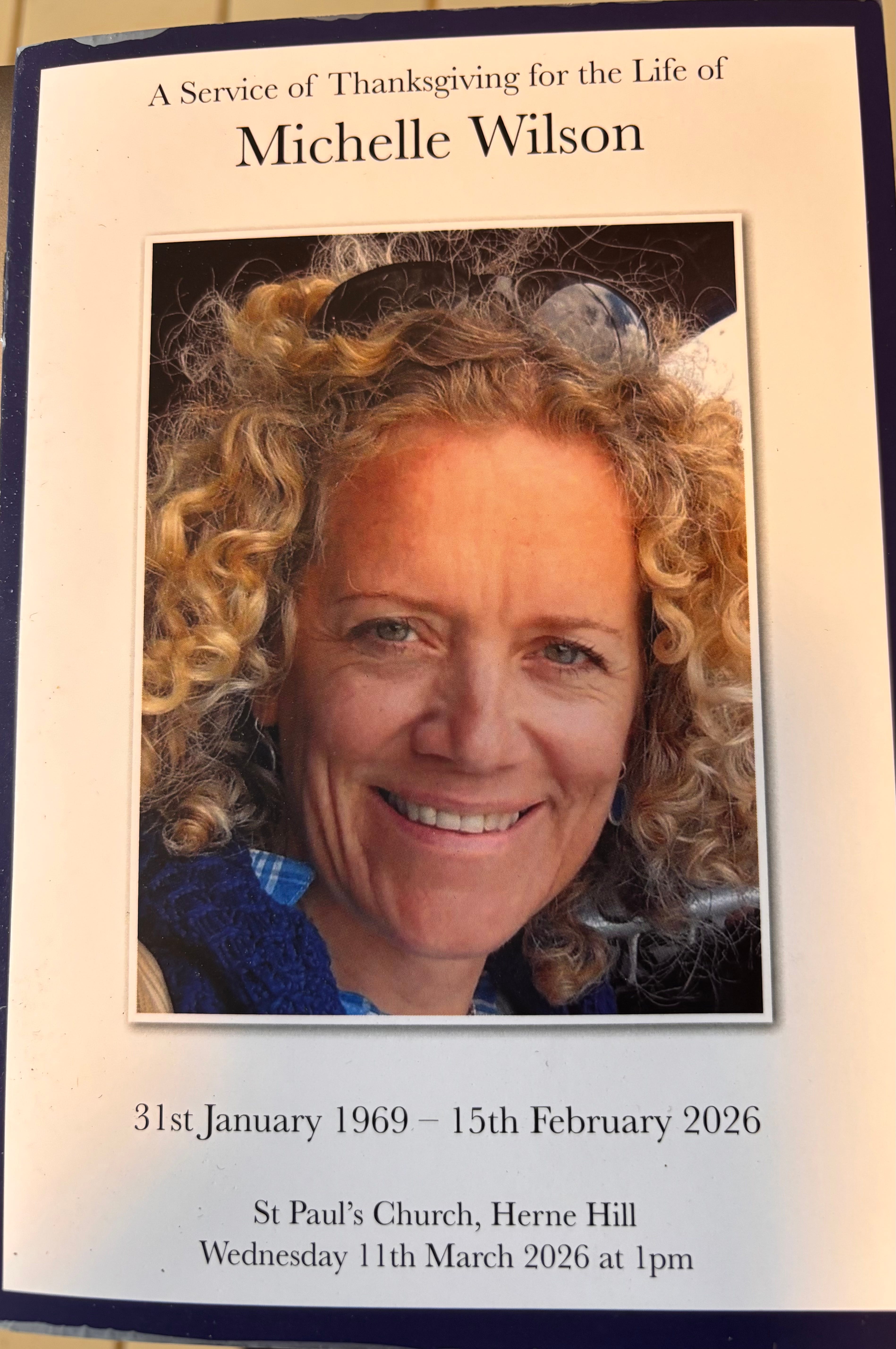
This week I went to the funeral of my dear friend, Michelle Wilson. St Paul’s Church in Herne Hill was packed, filled with people who genuinely, deeply loved her. I sat there thinking about what it means to leave the kind of mark she has made.
As a younger man, I set out into the world determined to make my mark. History books and stories are filled with this idea - that the aim is to do things, change things, make things better. Read with older eyes, those narratives can feel brash, linear, and oddly innocent of consequences. The hero rarely lingers on the collateral damage.
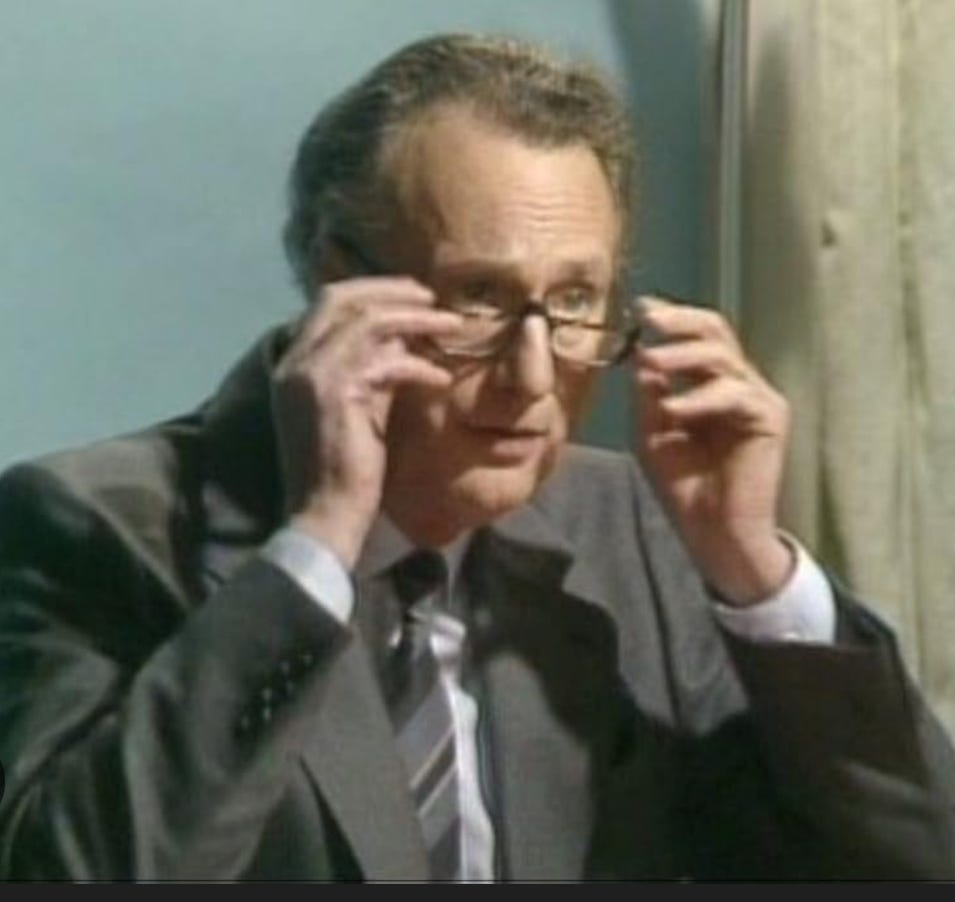
An interview I saw with Paul Eddington has stuck with me for decades. He was the actor whose brilliant portrayal of Jim Hacker in Yes, Prime Minister made the absurdity of power both hilarious and uncomfortably recognisable. He had been diagnosed with mycosis fungoides, a rare and cruel cancer that had left his skin visibly patchy. He was plainly, dying. He spoke about being asked what he wanted his epitaph to be:
“He did very little harm. And that is not easy. Most people do a great deal of harm.”
I remember both my parents mocking this. Too small, too modest, too self-effacing for a man of his talent. But even as a child I found myself trying to argue his corner, because it seemed to me that Eddington understood something my parents didn’t. It is not easy not to do harm. It is all too easy, when we are frustrated, or frightened, or convinced we mean well, to leave damage in our wake. To have moved through an entire life without causing that kind of wreckage? That struck me then, and strikes me now, as a genuinely laudable goal.
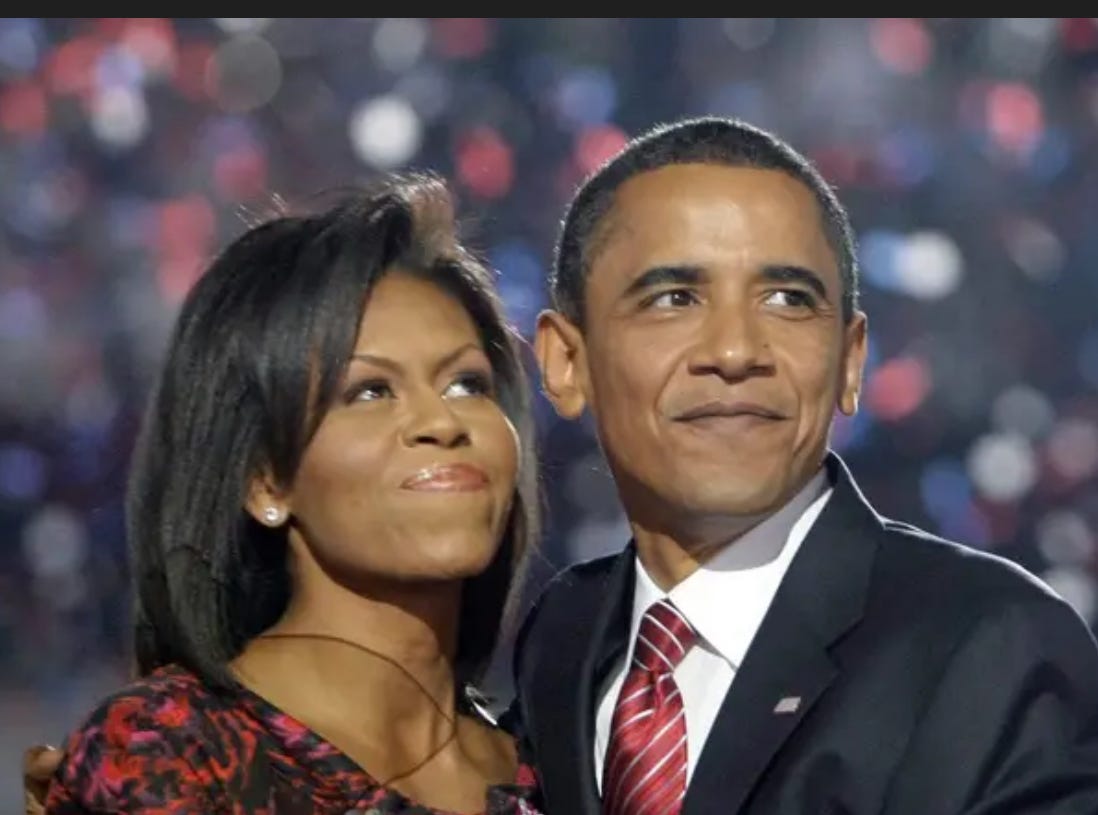
Barack Obama’s autobiography contains moments of painful, almost startling honesty. At one point his wife Michelle asks him, with barely-concealed exhaustion:
“God, Barack, when is it ever going to be enough?”
It stops him cold. And then, on a visit to Egypt, he finds himself staring at an ancient portrait daubed on a wall, and reflects:
“The pharaoh, the slave and the vandal, long turned to dust. Just as every speech I delivered, every law I passed, and every decision I made would soon be forgotten. Just as I and all I loved would someday turn into dust.”
It is sobering to watch a man who has achieved what Obama achieved look back and conclude that it will all, eventually, dissolve.
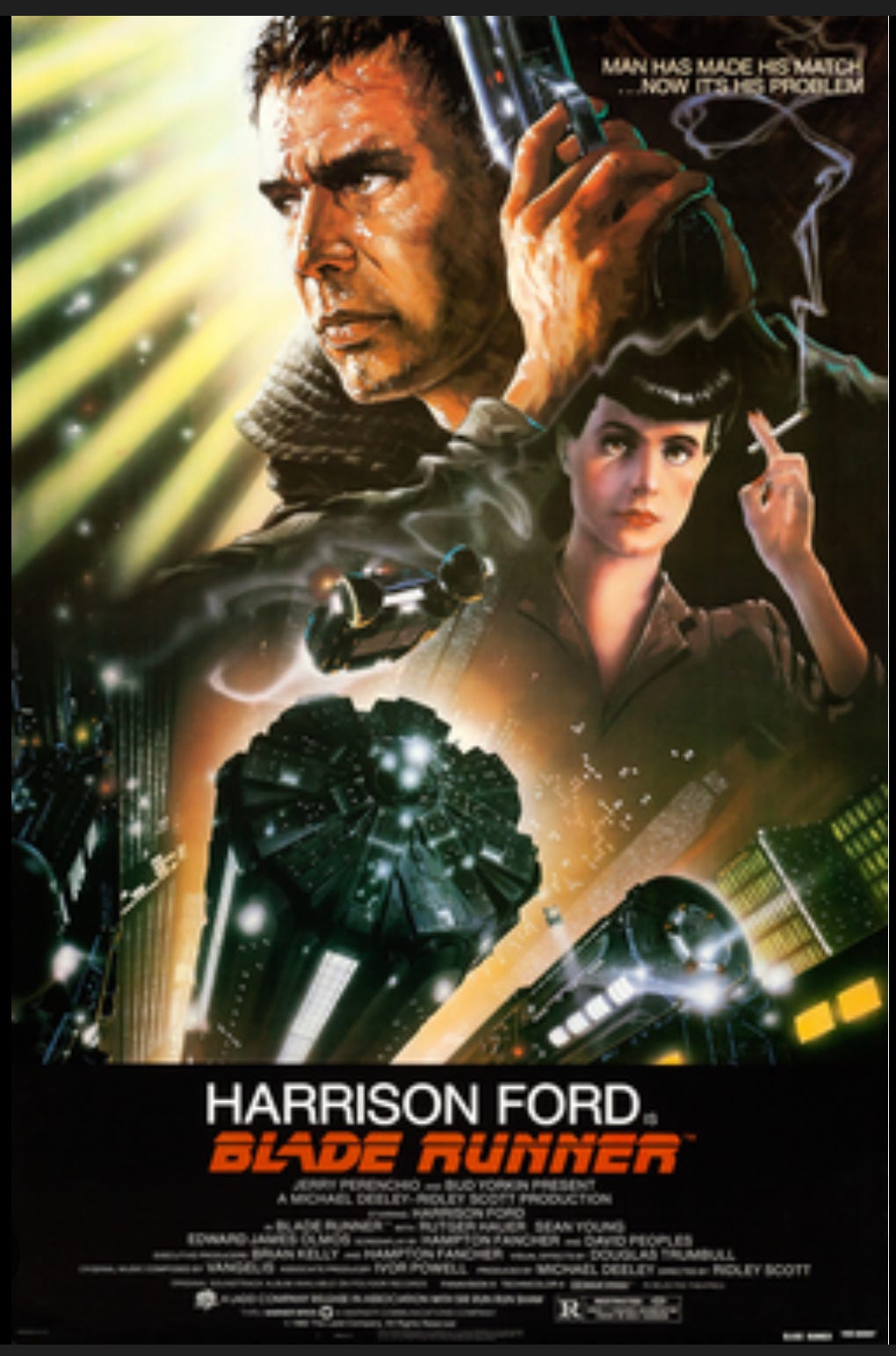
Literature and films keep arriving at the same place. At the end of Blade Runner, the replicant Roy Batty, a synthetic being whose engineered lifespan is counted in years, delivers what remains one of cinema’s most unexpectedly moving soliloquies as he sits in the rain and waits to die:
“I’ve seen things you people wouldn’t believe. Attack ships on fire off the shoulder of Orion. I watched C-beams glitter in the dark near the Tannhäuser Gate. All those moments will be lost in time, like tears in rain. Time to die.”
What is remarkable is that it is the inhuman creature who grasps this most clearly. Perhaps because he had less time to pretend otherwise.
I have been revisiting Shakespeare’s sonnets with all of this in mind, and at this stage of life they strike me quite differently than they once did. They are a sustained meditation on the complex, sometimes agonising interaction between time and love. Time will wither us. Love, too, can tear us apart. And yet, time might stretch toward something like eternity, and love can furnish us with the strength to get through an appalling Wednesday.
Shakespeare chides his lover not to be selfish with their beauty and their self, to build something through love rather than guard it. This crystallises in what is perhaps the most famous sonnet of all: Shall I compare thee to a summer’s day?.
He acknowledges that:
“…summer’s lease hath all too short a date”
before arriving in what I consider one of the most perfectly formed sentences in the English language:
“But thy eternal summer shall not fade.”
Why? Because:
“So long as men can breathe, or eyes can see,
So long lives this, and this gives life to thee.”
It is an extraordinary claim. This poem, which tries to capture your essence, will be as close to the eternal as any of us will ever get. The sheer fact that I am quoting it several hundred years later proves his point. And yet buried within the boast is the caveat he cannot quite avoid, “so long as men can breathe”, which will not, of course, be forever.
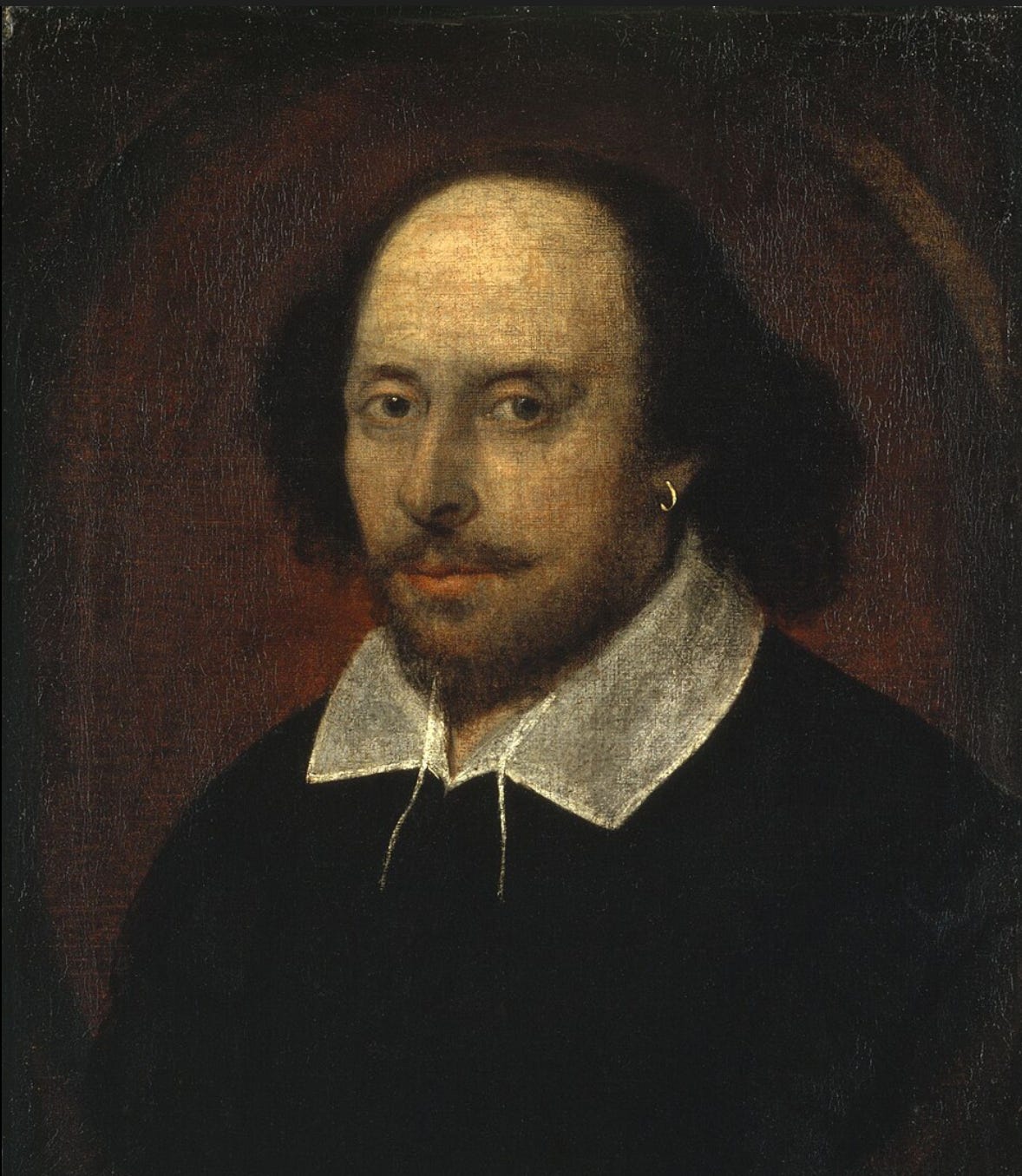
But he is really nodding to another kind of mark entirely. One that doesn’t require posterity or publication or the judgement of history.
David Brooks talks about the difference between résumé values - the things that look impressive when listed on a CV - and eulogy values - the things people actually say about you when you are gone. The distinction sounds simple. It is, in practice, one of the hardest things in the world to keep straight.
Which brings me back to Michelle - and the mark she made.
Her brother Mark told stories of a difficult childhood carried with extraordinary lightness. Her colleague Rob reminded us that despite a very real, very serious fear of flying, Michelle took jobs for charities in Africa, zipping around the continent, sometimes in single-prop planes, because the work mattered more than her fear. Her friend Catherine spoke of laughing until they could barely breathe on a dodgy overnight coach, where the toilet door kept swinging open on corners, repeatedly revealing some horrified, unsuspecting person on the loo. The vicar, her friend Andy, described the quiet, considerable task of organising the many, many people who wanted to visit her in her care home in her final months.
These are not résumé values. They are something else entirely, a different kind of mark, pressed into the people she touched. And that mark will echo. It will travel, invisibly, through the generations, in ways none of us can trace or predict.
Yes, it will ultimately be lost, like tears in rain. But I find myself drawn to a Buddhist image of life as a drop of water rising from the sea. It ascends, perhaps glistens for a moment at its peak, and then falls back into the body of water from which it came. In that brief separation there is a chance to focus. Not always on the résumé. Sometimes, more often than we manage, on the things that will be in our eulogy.
I forget this constantly. I get pulled toward things that don’t, in the end, matter very much at all. And when I do I see the mis-steps and the unintended impact.
Michelle’s mark on me will be a deep and lasting desire to remember to focus more on the eulogy virtues than the résumé ones. Long may her influence continue.
(If you have found this piece helpful, please hit the heart-shaped ‘like’ button or the circular ‘restack’ button. It helps more people read it. Thank you.)
NOTES:
Paul Eddington Tribute (including the quote I reference at the end)
A Promised Land - by Barack Obama
https://barackobamabooks.com/
Blade Runner - directed by Ridley Scott
https://www.imdb.com/title/tt0083658/
The Sonnets -by William Shakespeare
https://shakespeare.mit.edu/Poetry/sonnets.html
Resume virtues vs eulogy virtues - David Brooks
Again Craig, so well written, such tender words. It was an outstandingly good funeral for a remarkable woman: her indelibly joyous touch leaves us better off for knowing her.