

Knowing We Could Be Wrong
We base our lives - even entire societies - on assumptions that often turn out to be wrong. So what do we believe now that the future will reveal to be false?

Humans are more than capable of being catastrophically, sometimes comically, occasionally murderously wrong - despite having felt in every fibre of our being, that we are right.
Let’s start small. The Trobriand Islanders of the Pacific, documented by the anthropologist Bronisław Malinowski, were a sophisticated, artistically rich people who believed, with complete cultural certainty, that pregnancy had nothing to do with sex. They were convinced a woman conceived when a spirit child entered her body - sometimes when she crouched over a cooking pot and rising steam carried an ancestral spirit into her. For them, this wasn’t ignorance it was knowledge. Woven into story and ritual and the fabric of daily life. Confirmed by elders. Passed through generations.
We might hear that and give a patronising smile. But should we really feel that superior?
Scale it up. The Soviet Union didn’t just believe it could manage an economy from the centre by ideological decree - it built an entire civilisation on that conviction. Ministries in Moscow decided what a farm in Ukraine should plant, what a factory in Siberia should produce, even what a writer in Leningrad should think. And when reality pushed back, harvests failed, numbers didn’t add-up, human beings stubbornly refused to perform - the response was not to question the belief. It was to punish the reality. Stalin’s purges, the gulags, the engineered famines: these were not the actions of people who doubted themselves. They were the actions of people who were certain. Certainty, unexamined and absolute, had an enormous body count.
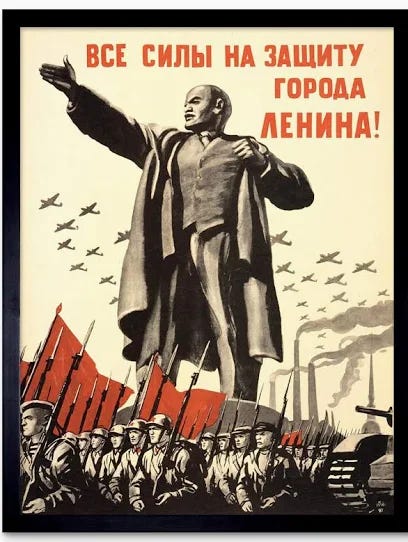
Between the polls of the cooking pot and the gulag lies and entire terrain of human wrongness and we all occupy it - whether as part of a group, or individually.
We are approaching the tenth anniversary of the Brexit vote. There’s been a lot of rewriting history - but I know that when the polls closed at 10pm on the 23rd of June, 2016, no credible person thought that the UK had voted to leave the European Union. Pollsters were clear that Remain had won by 8 points. Nigel Farage conceded. But in the small hours of the morning it became clear we were all wrong. There are lots of reasons why - but here are the two main ones:
Pollsters weighted their polls. Too clever by half, they noted that around 3 million who had a preference for Leave had not actually voted in previous elections. They wrongly assumed that pattern would continue - and they were stripped out of the polling, giving a misleading impression that Remain was ahead. In fact - those people had calculated that in a referendum their vote counted equally to anyone else - whereas in other elections, if they lived in an area where the majority view was different to theirs, voting was pointless. Those votes made all the difference.
The establishment view was that if all of the main political parties backed Remain, people would toe the line. In fact, it was the dawn of an age of populism and people felt very motivated to kick the establishment.
The groupthink was spectacularly wrong. The direction of many lives - and an entire country - changed as a result.

On a personal level, we can get the wrong idea very early. Those ideas arrive before we have the vocabulary to question them, before we have the distance to see them as ideas at all. They have the texture and weight of facts.
The child who is told, repeatedly and in a thousand unspoken ways, that they are not quite enough - not loveable enough, not capable enough, not worthy of occupying their space - doesn’t file that away as an opinion to be tested. They build their life on it.
I have seen this in myself - manifesting in the low-level persistent certainty that life is fundamentally a grind rather than a gift; that it is a trial to be endured rather than an experience to be inhabited; that my role - my purpose - was to fix things, and - no matter what the cost - to sacrifice the personal in favour of the professional, and experience guilt when I didn’t. These were not feelings I chose. They arrived as furniture. They were simply the room I lived in. Late on - I realised they were all wrong.
Carl Jung saw this mechanism with forensic clarity:
“Until you make the unconscious conscious, it will direct your life and you will call it fate.”
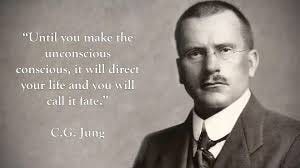
That is the precise and unsettling point. We do not experience our ingrained beliefs as beliefs at all. We experience them as reality - as simply the way things are, the way we are, the way the world works. The grind is not a story I absorbed and accepted. It was, for a long time, just life. My unconscious script, running quietly beneath everything, shaping every choice, every relationship, every morning - and I called it fate.
Which brings me to the question I find both uncomfortable and necessary:
What am I certain of now that is wrong?
And beyond the personal: what will people look back on in two hundred years and find as bewildering, as morally incomprehensible, as we find the certainties of two centuries ago? It seems likely they will find something. They always do.
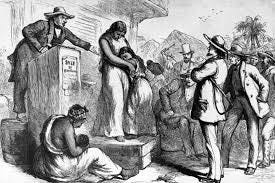
We look back at a world that was absolutely convinced that women could not be trusted with a vote, that the natural order required some people to own other people, that a man who loved another man deserved imprisonment or worse, that children who behaved differently should be beaten into conformity, that the mentally ill should be hidden and shamed. Were these the views of monsters? Or were they the views of magistrates and ministers, of poets and professors, of people who loved their families and were kind to their pets and went to church on Sundays? They were the water those generations swam in. And they were wrong in ways that still echo.
David Foster Wallace opened a commencement address with a parable about this.
Two young fish are swimming along when an older fish passes them going the other way and nods: “Morning boys, how’s the water?” The two young fish swim on until eventually one turns to the other and says: “What the hell is water?”
Wallace’s point was simple and devastating: “The most obvious, ubiquitous, important realities are often the ones that are hardest to see and talk about.” We cannot easily examine the water we swim in. The assumptions so total, so ambient, so woven into our daily lives that they become invisible despite being in plain sight - because seeing them would require us to stand outside ourselves in a way that is almost impossible to do alone.
So what is our water? What is our cooking pot? What is the thing we are so fused with that we cannot see it? Perhaps it is the belief that the economic system we have built -one that has lifted billions from poverty but also concentrates staggering wealth in vanishingly few hands while straining the planet - is simply the natural order of things. Perhaps it is the way we treat animals at industrial scale, a practice that future generations may regard with the same horrified disbelief we now bring to slavery. Perhaps it is something we cannot yet name, because naming it would require exactly the kind of seeing that Wallace’s fish could not manage.
And here is what makes this so difficult, so deeply human. John Kenneth Galbraith, one of the twentieth century’s most incisive economic minds, put his finger on it with characteristic precision:
“Faced with the choice between changing one’s mind and proving that there is no need to do so, almost everyone gets busy on the proof.”
We see this more than ever in a world catalysed by social media.
We are not wired for the admission of error. We are wired, it seems, for its opposite - for the elaborate, energetic, often unconscious project of confirming what we already believe. This is not stupidity. It is not even weakness. It is simply what minds do. But unnamed and unexamined, it is how we end up with the thinking of cooking pots and gulags.
This is where Socrates becomes not just relevant but urgent - and, I’ll admit, often maddening.
I have been reading more about him lately, and I understand completely why the pragmatists of ancient Athens found him exhausting. Here was a man who would collar you, dismantle everything you thought you knew - and then, when you were thoroughly at sea, simply wander off.
You can almost hear the frustration: “Can we please establish some agreed principles so we can actually get things done?” They made him drink hemlock for it.
There is a version of Socratic questioning that tips into paralysis - an endless relativism where nothing is solid, where all positions dissolve under examination, where we lose our bearings entirely and cannot say with confidence that anything is right or wrong, up or down.
But that is not, I think, what Socrates was really after. Beneath the methodology, questions and provocations was something far gentler and more human. It was the recognition that we are all, to varying degrees, prisoners of our own unexamined assumptions. And that the beginning of wisdom is not certainty, but the honest acknowledgement that we might be wrong.
The Swedish Buddhist monk Björn Natthiko Lindeblad, whose life and writing I return often return to here, put it with characteristic clarity and warmth. When we truly accept how flawed we are and stop defending our certainties and start examining them - something shifts. We understand more. We empathise more. We go easier on ourselves and on others. Not because we have abandoned our values, but because we have loosened our grip on the idea that we see everything clearly. Humility, it turns out, is not weakness. It is the precondition for genuine understanding. And genuine understanding is a far more constructive place to begin than the attritional conflict that comes from two sets of unexamined certainties colliding at speed.
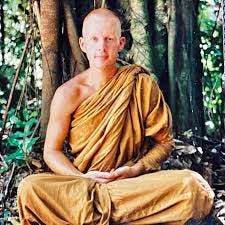
This is not a counsel of comfortable vagueness. Some things are wrong. Dignity matters. Cruelty is real. The suffering of others is not a matter of perspective. But there is a world of difference between moral clarity and the kind of rigid, defended certainty that built the gulags and lit the witch-trial fires.
When I look at what were ingrained beliefs that I have tried to shake - the grind, the fixing, the sacrifice, the unworthiness worn like a second skin - I am not looking at the truth of who I am. I am looking at ideas that arrived early and stayed too long. They can be questioned. They can be tested. They can, with patience and some courage, be gently set down. I’m trying.
And when I do, something opens up.
If the certainties we hold most tightly might be the ones most worth examining - if we might have the wrong end of the stick in ways we cannot yet see - then there is room. Room for a different story about ourselves, about others, about what is possible. Room to approach the world not with the defended rigidity of someone who must be right, but with the open curiosity of someone willing to be surprised.
It is the difference between being rigid and being liquid - the ability to flow, instead of remaining stuck.
(If you have found this useful - please hit the heart-shaped ‘Like’ button, or the circular ‘Restack’ button - it helps more people see it).
One of the best things about travelling to far-away places is that it puts one in different "water", and because it's different, one notices it, which hopefully enables an examination of the familiar water called 'normal'. Living for a year in a small town in Jordan with a very poor family certainly was eye-opening, and the experience has definitely influenced my levels of certainty. Dabbling in Buddhism over the years has helped, and living long enough to find out just how OFTEN I've been wrong, tempers (somewhat) my penchant for black and white thinking. I enjoyed reading this very much, got my mind going to places it hadn't been in a while.
Thank you Craig for this very honest piece. I was also that child and it takes a long time, and physical distance, for the ramifications of all those experiences to subside. I think there is much to be said for getting older and wiser! As you remind us, It’s so crucial that we remain curious, both about ourselves and also the wider world.